One of my experiences in the watch community is that many watch enthusiasts share my affinity for art and architecture.
Not that I’m particularly knowledgeable about it, but I love strolling through museums and enjoying the artworks and often the architecture as well.
Well, you’ll find what you’re looking for in this respect at the Audemars Piguet museum. So this article looks actually not at the watches, but on the museum as such, its concept and realisation.
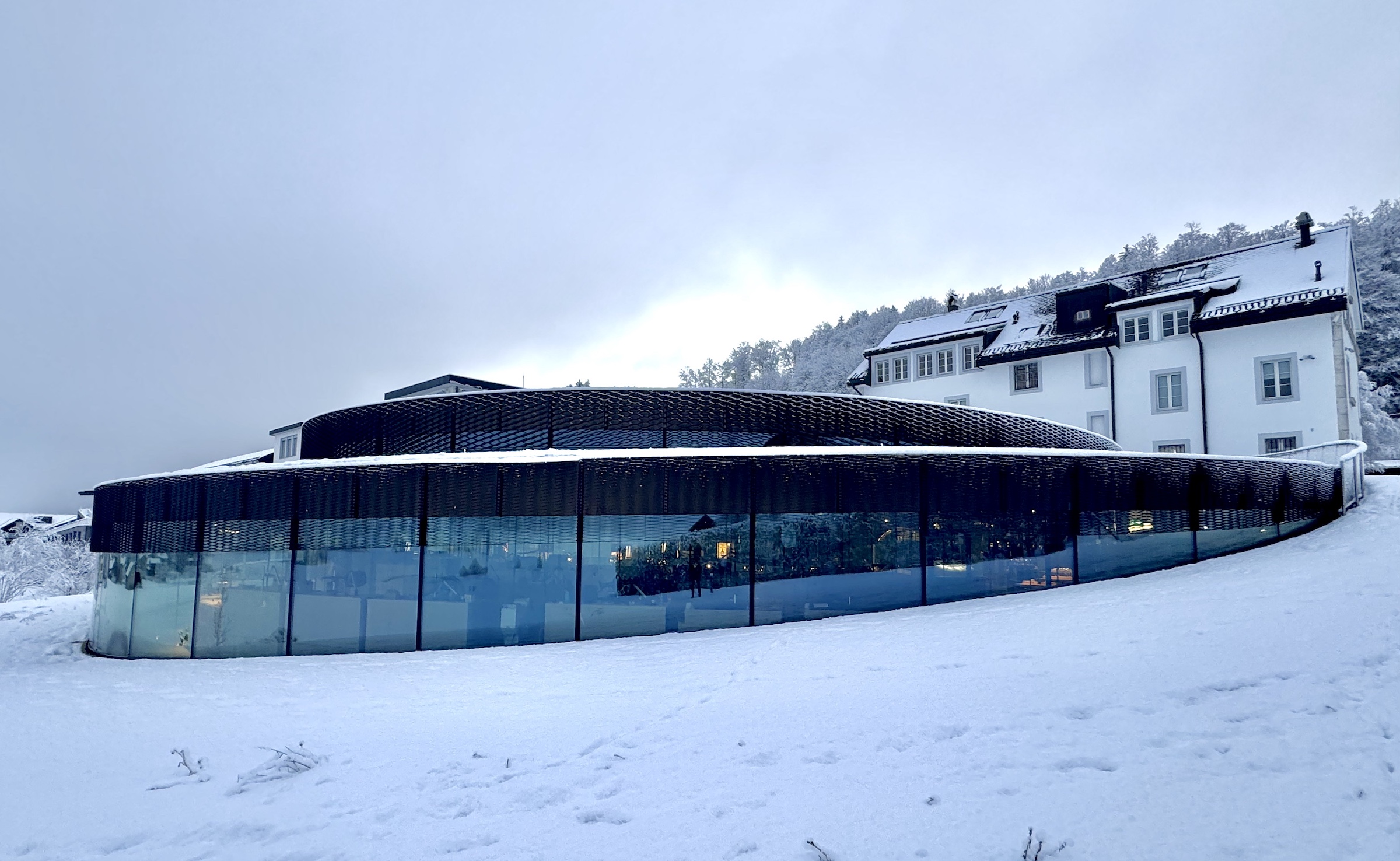
The most obvious and distinctive feature of the new museum of Audemars Piguet is its basic shape, which is probably kind of familiar to many readers as it is based on a hairspring.
However, this is not immediately obvious when you are actually there, as you are not looking at the building from above. However, if you take the time to walk around the building before or after visiting the museum (see featured picture above), you will definitely recognise it. And it can actually be seen from the inside too.
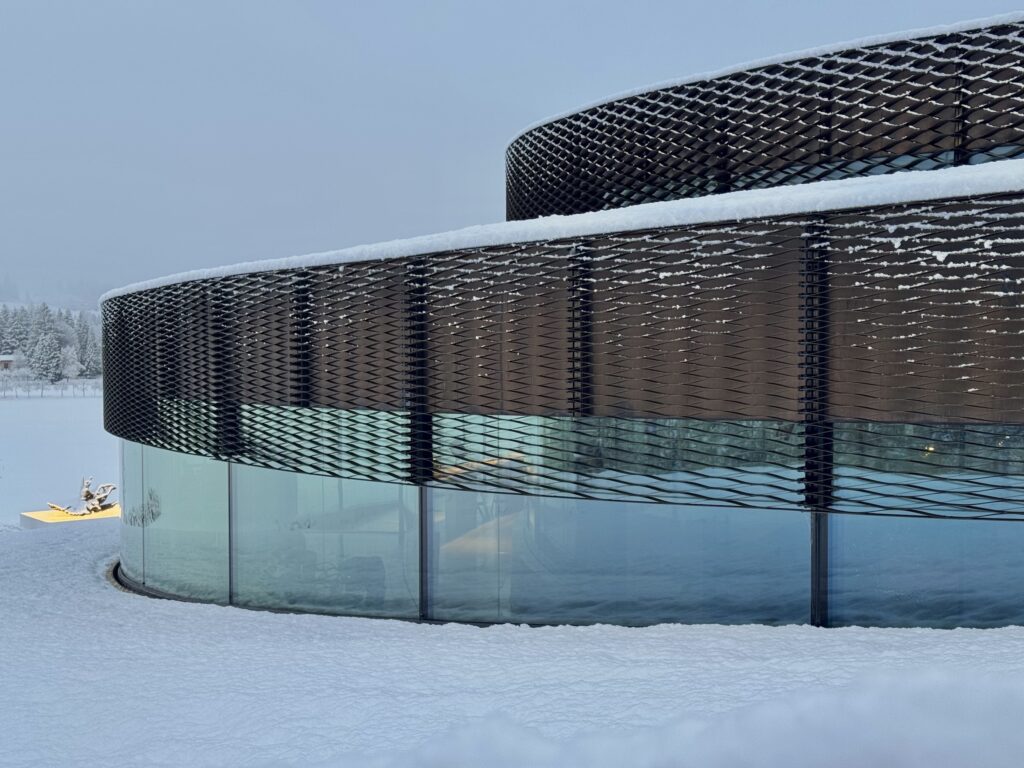
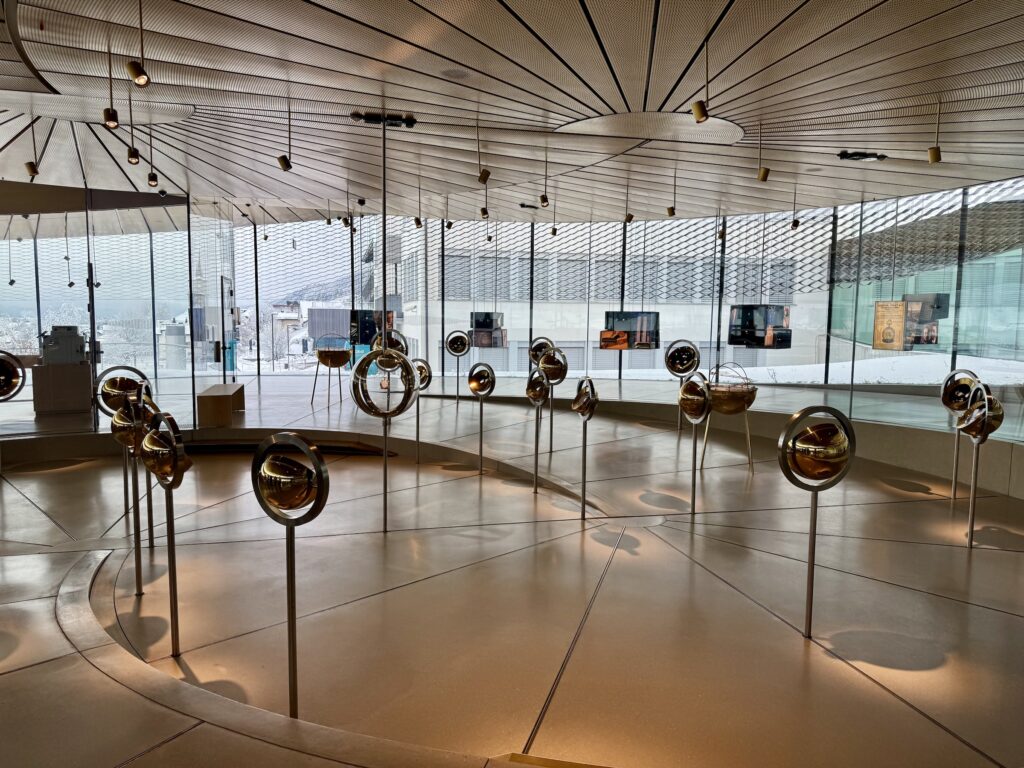
The really spectacular building was build by the well known architect Bjarke Ingels and his company BIG. The spiral-shaped architecture is not only a tribute to watchmaking, it also allows for very bright interior spaces with sensational views.
This view is supported by the complete absence of pillars of any kind: the entire construction rests on the glass walls that support the roof, which weighs 470 tonnes (plus the additional weight of snow in winter).
You may note that nothing is straight in this building, everything is kind of rounded. In fact, at the time AP commissioned the museum’s design, BIG was not yet as famous as it is today – but it was apparently the only architect that understood what AP was looking for.

But there is not only architecture (and watches, of course), there’s also art to be found in Le Brassus.
The dinosaur skull (a triceratops actually) is a bronze work by the Argentinian artist Adrián Villar Rojas which will later be shown in the Aspen Art Museum in Aspen, Colorado.

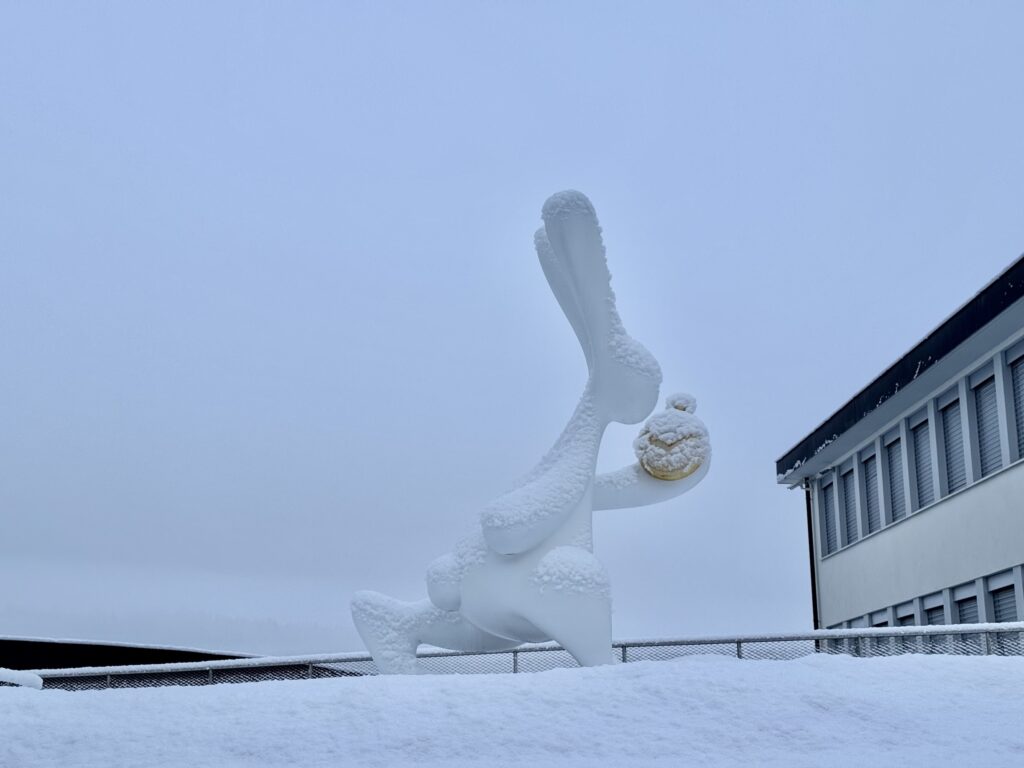
The giant white rabbit on the other hand – inspired by the anthropomorphic character in Alice’s Adventures in Wonderland (who in the watch community isn’t familiar with term ‘rabbit hole’?) – was designed by an untold artist from the Vallée de Joux. Furthermore, strictly speaking, it is not a unique piece, as there is also one in front of the factory in Le Locle.
We have been told that AP gave hin a proper pocket watch, so that his constant fear of being late will be unfounded in future.


If you take another look at the featured image above, you can see the old building behind the ‘spiral’ where Audemars Piguet was founded in 1875. This is where you enter the museum (after ringing the bell and telling your name – security first!).
The tour starts with meeting the staff and with coffee, chocolates and an introduction.
The museum itself, the interior and didactics was designed by a company called «Atelier Brückner»; probably you never heard of them, but on their client list are names like The London Museum, Louvre Abu Dhabi and … the new sensational Grand Egyptian Museum.
Here you will find not only more photos but also a graphic showing the whole concept – which is apparently inspired by the idea of a musical score.
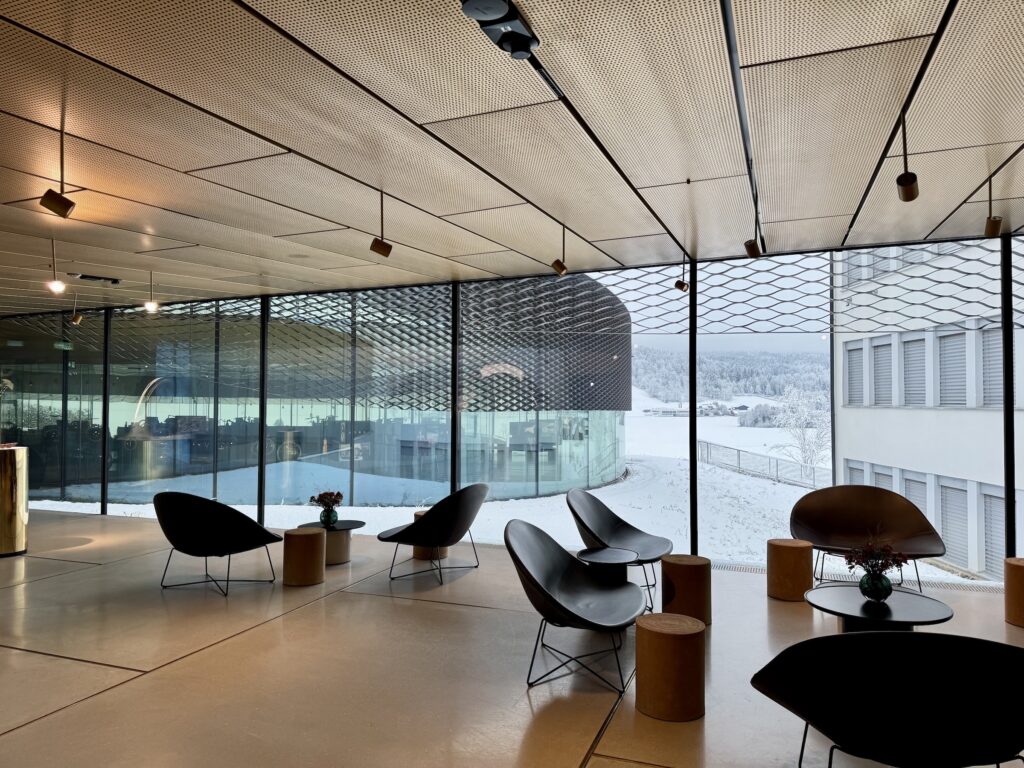
So it starts with an overture: The first room is a kind of conference room, which is still outside the spiral and allows a view of the spiral from both inside and outside at the same time.
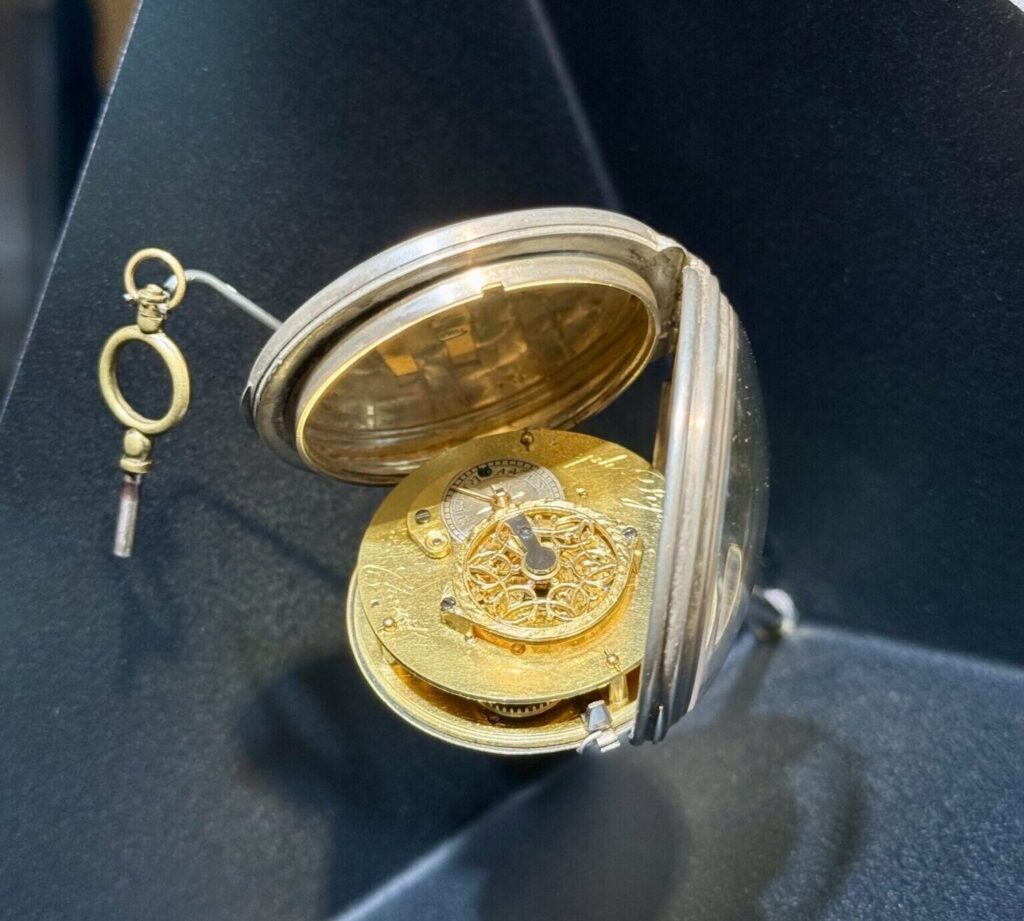
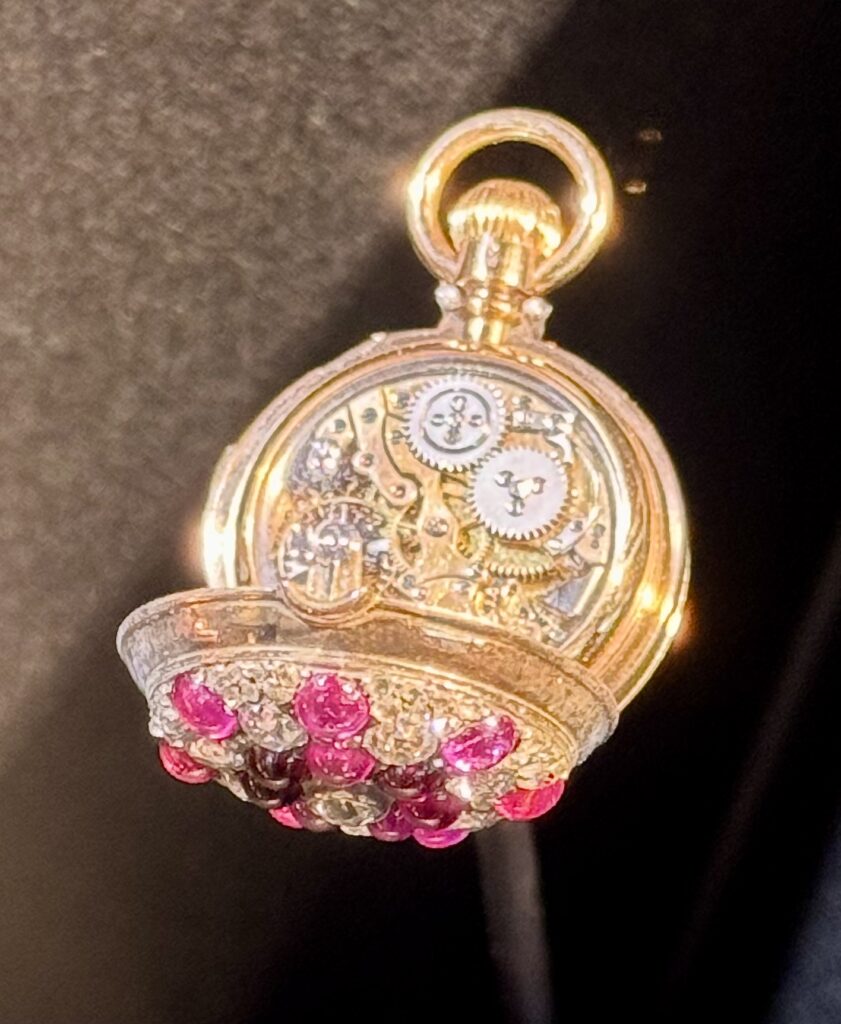
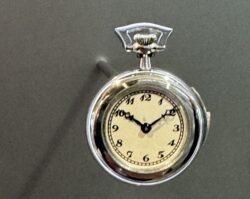
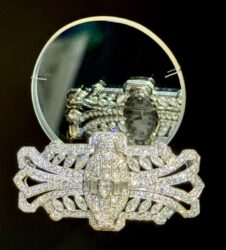
The (speaking in musical terms) theme – the start of the actual exhibition – is based on some early works of Messieurs Audemars and Piguet, and also as this early master piece of Joseph Piguet, an ancestor of Edward Auguste Piguet or the stunning (sorry for the picture quality) minute repeater of Louis Audemars.
Following this, the concept ist based on „variations on the theme“, i. e. a couple of „islands“, concentrating on various subjects: chronographs (including the one designed by Michael Schumacher), repetitions, (including a large mock-up to play around yourself), perpetual calendars and more.
This is way I would call the heart of the museum.
Below you see a waterproof repeater watch with its special caseback and the world’s smallest repeater movement (from 1921).; This exhibit is complemented by a handwritten note from the maker stating that he will never do such a thing again!
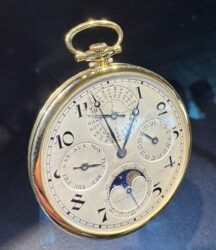
Maybe by favourite watch of the whole museum is this perpetual pocket watch. Just look at the way, the 4-year-cycle is displayed … and this kind of modern font!
Kind if the centre if the spiral is the „L’Universelle“ was the most complicated watch of the world at the time. Developed and built by Audemars Piguet … but labeled Union Glashütte …
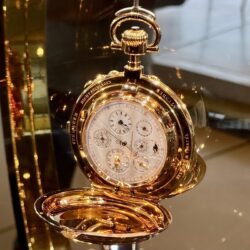
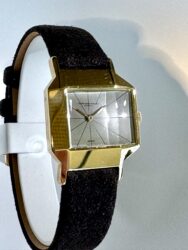
While a few highlights from early history paved the way at the beginning, towards the end there are several very design-oriented pieces that showcase the broad historical heritage of AP very well.
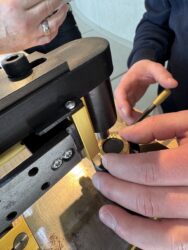
And now for the «bridge» (the horological and the musical one): it’s time not only to look, but to get hands-on!
You can tinker around with ever so tiny screws and even do some pelage only a brass bezel which you can take with you as a souvenir. Especially when you’re in a group this is the fun part of the tour!

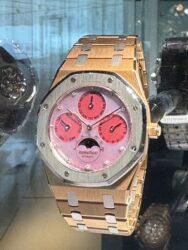
… and now for the grand finale. To my eyes with a wink it’s at the end all about the queen of watches, the Royal Oak.
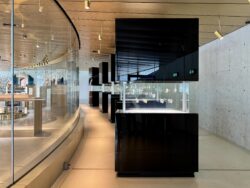
At fist the display cabinets are closed and a short film is played on the shiny black panel, which is actually a screen! In sync with the accompanying music the black boxes open themselves and reveal an eclectic collection of very different Royal Oakes. From Karl Lagerfelds blackened personal watch to the Black Panther (which is actually only on loan to the museum from the owner).

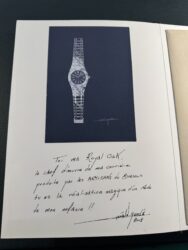
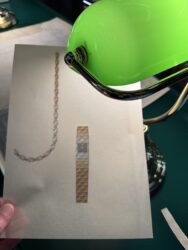
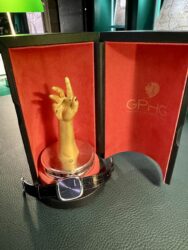
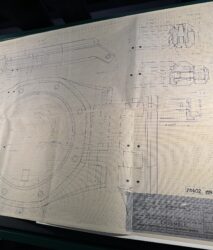
Just one more thing … the coda: Just when you think the superb tour comes to an end, there is another highlight. They lead you into a small, hidden room (you actually pull a book in a bookshelf and the door opens ;-)) full of documents and artefacts of APs history. Facsimiles of the original drawings, old ads and much more. You are encouraged to touch everything and play around with it. I could easily spend an hour in this room alone!
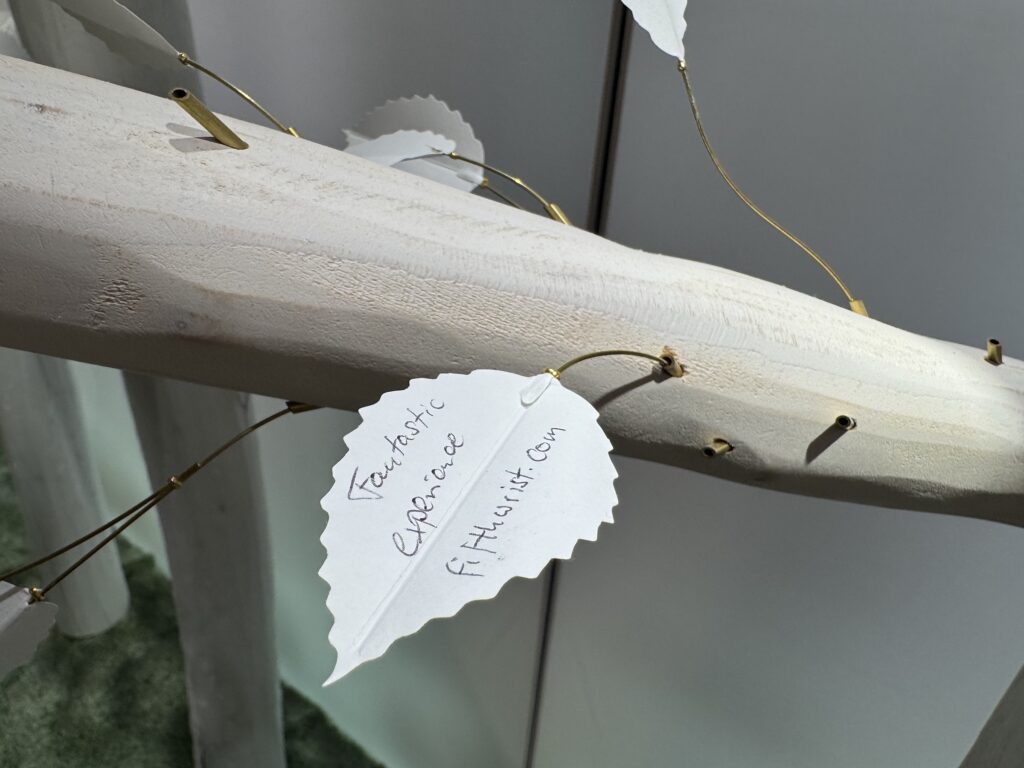
Finally the tour comes to an end the way it started … meeting people: a small room is covered with pictures of 1.000 AP employees to make you „familiar“ with the brand. On the way out you pass the „forest of wishes“ in which you have the opportunity to leave a wish or a greeting.
One member of my group summed up the experience quite well, in my opinion, when he said as we were leaving Audemars Piguet: “I would like to work here.”


Acknowledgements:
Many thanks to Sandra and Urte from the Audemars Piguet Museum for their hospitality and knowledge.
Also thanks to LVO for organising the trip.
PS:
there are two articles about the Audemars Piguet Museum from two different angles on this site: the museum as such (this one) and – of course – the watches.
PPS:
If you happen to understand German – or you are brave enough to cope with the automatic transcription and translation, there is more on out German YouTube channel

Leave a Reply
You must be logged in to post a comment.